BagNews Archives About Staff BagNews is a progressive site dedicated to visual politics and the analysis of news images.
Monday, February 13, 2012

Twitter

@bagnewsnotes »
Advertisement


December 27, 2009

Airport Security Increased After Terrorism Attempt
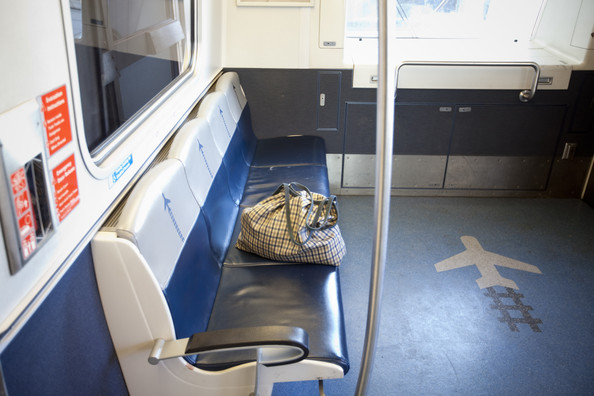
Airport security Detroit failed attack.jpg

As you can imagine, news sites have been filled with photos illustrating heightened airline security since the failed attack on an international flight over Detroit on Christmas Day. In these pictures, we see hyper-vigilant security screeners, bomb sniffing dogs, curbside patrols and TSA agents and even the National Guard keeping watch inside air terminals.

Zimbio has one such slideshow featuring 19 pictures taken at Dallas/Ft. Worth International and JFK. What caught my attention, however, was the shot above, cleverly included in the photo package. Symbolizing the scope of the problem and the extent of the vulnerability, the photographer assigned to JFK happened to captured this unattended bag riding the AirTrain.

(photo: Michael Nagle/Getty Images. December 27, 2009. Queens, New York.)

  • Samantha

    Not sure what I can say about the photo, other than yes, there are many ways to explode a bomb and cause devastation, and we’ve seen it overseas. You can’t stop terrorism. You can, however, stop the panic and overeaction and deal with it as best you can. We’re all dropping like flies each year with unnecessary deaths from auto accidents, diseases, natural disasters, domestic violence, and neglect. But there are few headlines for most of that.

  • http://www.iesltd.com Rstorey

    As you know, In lieu of the recent reactions to the terrorist plot on Flight 253, as you know, many international air passengers flying into the United States will face added costs that logically go hand-in-hand with additional screenings.
    However, I think it is important to take all of the result publicity focused on security measures to also point to air Cargo as well. DHS announced that it will push back its proposed 100% Cargo Screening for two years to 2014. DHS cited logistical challenges as well as a shortage of DHS manpower. It was well publicized that many in the European Trade community denounced 100% Cargo Screening when it was proposed. In addition, there was both domestic and international concern of who would pick up the tab for the implementation, at as estimated $8 million per trade lade or $16.8 billion worldwide. IES: The Software Solution for the Future of Freight. IES serves Customs Brokers, NVOCCs, Freight Forwarders and more. In addition, there was a concern that this cost would affect the entire industry, from the manufacturer, to the consolidator, to the carrier, the ports, customs broker, freight forwarder, warehousing and distribution, to the importers and ultimately, the consumer.
    Although it is does appear valid that 100% Cargo Screening would be an enormous undertaking, I believe that there should be some sort of plan in place right now for cargo screening. IES Ltd. ISF Leader. Software for Freight Forwarders, NVOCCs, Customs Brokers and More. For example, as a direct result of the recent incident aboard Flight 253, there was an immediate (and assumedly costly) implementation of additional security messages for air passengers flying into the US.
    A plan should be in place for cargo not just for security reasons, but also for the enormous potential for additional costs for any added security measures. If the tab for cargo screening has been pegged at 16.8 billion, imagine the cost if these same security measures were applied as a result of a crisis. If implementation is not feasible, then a solid plan should be in place.

  • http://profile.typepad.com/6p00e5523476cc8834 DennisQ

    The pictures of heavily armed RoboCops don’t inspire confidence; just the opposite is true. If air travel is so dangerous that travelers have to be “protected” by Blackwater-type thugs with Ouzis, it’s time for a re-think.
    We’ve clung tenaciously to the idea that terrorists are irrational. But at the same time we continue to wage war on Muslim countries and kill civilians by the thousands. How expensive is the War on Terror going to get before we sue for peace?
    Alternatively, we might consider a Transcontinental Bicycle Path. That would solve a bunch of problems at once!

    • Blowing up bicycles has none of the panache that blowing up airplanes has;
    • Bicycle paths use green technology;
    • Bicycle transportation will help solve America’s obesity problem; and
    • A network of bicycle paths will provide shovel-ready jobs for the unemployed.
  • Rossie

    I’m with Samantha here: what this exposes is misdirection and fear-mongering.
    As Nate Silver writes:
    “Over the past decade, according to BTS, there have been 99,320,309 commercial airline departures that either originated or landed within the United States. Dividing by six, we get one terrorist incident per 16,553,385 departures.”
    I’d be much more interested in finding out why photographers have such a hard time finding compelling images for the health care crisis….which kills more people each month than the attacks of 9/11.