BagNews Archives About Staff BagNews is a progressive site dedicated to visual politics and the analysis of news images.
Thursday, February 09, 2012
September 27, 2005

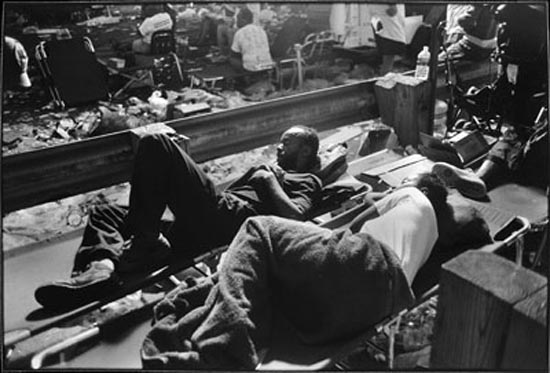
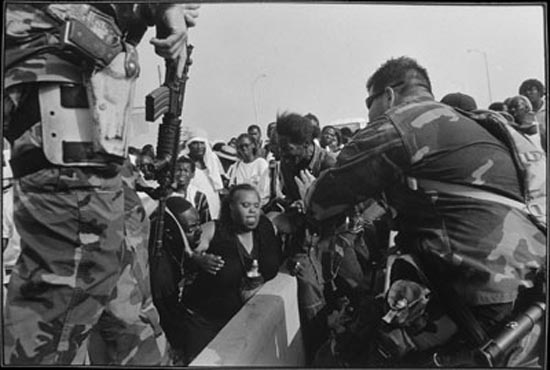
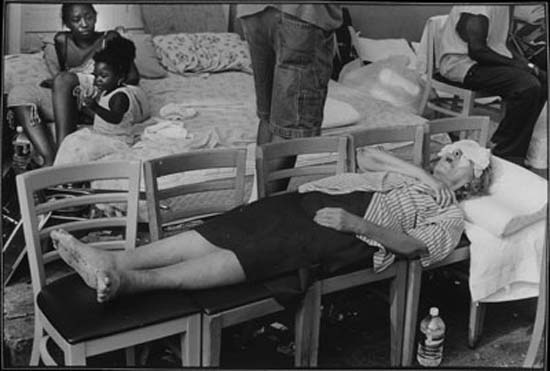
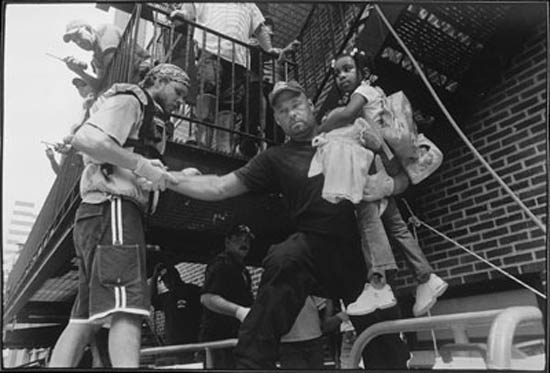
Katrina Aftermath: And Then I Saw These

(Update: 7.28.05 12:31 a.m. PST:  Due to the keen interest in this series, all the photos have been reposted at a larger size, and numbered for easier reference. Also, Alan Chin welcomes all questions via the comment thread — critical or otherwise.)

1Chinno07
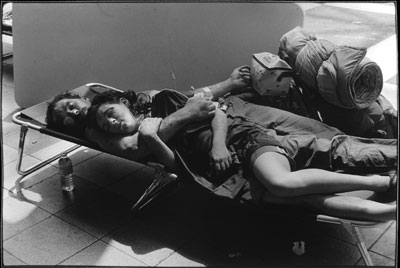
2Chinno23-2

3Chinno28-1

Until last night, I thought the news images we had seen from New Orleans during the worst days of Katrina were fundamentally unvarnished.  And then I saw these.

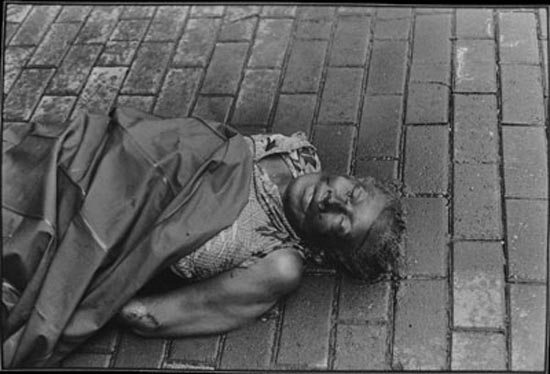
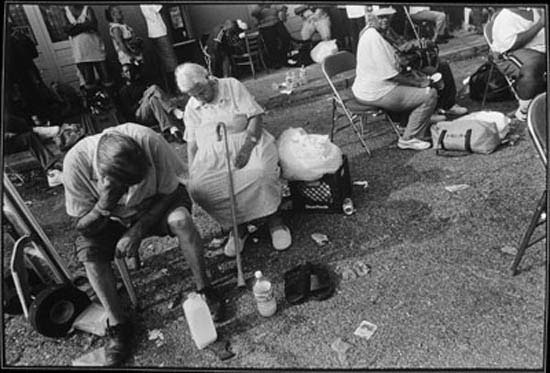
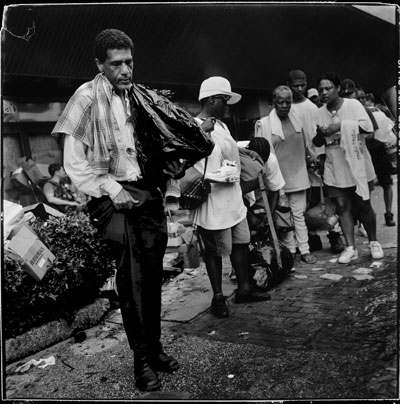
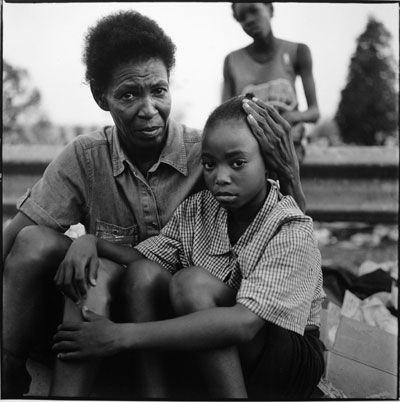
Among his peers, Alan Chin is regarded as one of the finest photojournalists in the field — and I say that not just because he is a friend of this site. What these photos do is bear witness to much of the information that was reinforced through the written word. At the height of the disaster, we saw scenes of suffering, but were primarily told how bitter, annihilating and incomprehensible it was. We saw death, but were told it was everywhere.  Also, we saw scenes of dignity and of contempt — but not quite as boldly as this.

Two of these images ran in the September 19th issue of Newsweek, and Alan has graciously made the series available to the BAG.  Speaking to him last night, he felt it was vitally important that people understand how serious a failure of government had occurred in New Orleans.  "I mean," he said, "the Indonesians had a tsunami, and they still handled it a hundred times better."

From the standpoint of this site, and my focus on visual politics and media, I asked Alan if he thought there had still been a "filter" on Katrina.  I asked because these pictures seem that much more raw.  Not surprisingly, his answer illuminated the difference it made that most of the news photos were in color.  Chin explained:

"I shot it in black-and-white because we live in America, so no matter what happens, we always have visual elements that are very distracting.  I was one of the only people who did this in black and white.  I felt it should not be distracted by color, by the fact someone might have been wearing a hot pink t-shirt.  I didn’t want that irony in it.  I wanted to get to the heart of the matter — to the crucial thing."

If you were following the BAG last June, you might recall the intellectual equivalent of a brush fire that broke out here over a photo Alan took for the NYT  (Punching Up The Orange – link). Chin had been included in a joint American – Iraqi raid in the town of Mahmudiya, and BnN readers had a lot of questions about the success of the operation, the coherence of the military strategy, the procedures and ethics of embedding journalists, and even the production value of the photo itself.  But what made the discussion so worthwhile was that Alan suddenly popped up in it, burning up the keyboard from various Baghdad safe houses over several days, taking on all matter of civil (and even some less-than-civil) questions and comments.

Once again, Alan has kindly offered to make himself available to discuss his work.  Therefore, as you comment, feel free to offer him any question you like regarding any and all the photos, what he saw, or how they were obtained.  Alan emphasizes that he is not shy about criticism, so say what you will.  Of course, I thank Alan for trusting his images to the BAG.

(Gallery: Click for larger version)

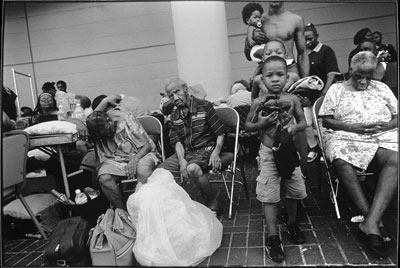
4Chinno006  5 Chinno001  6Chinno012
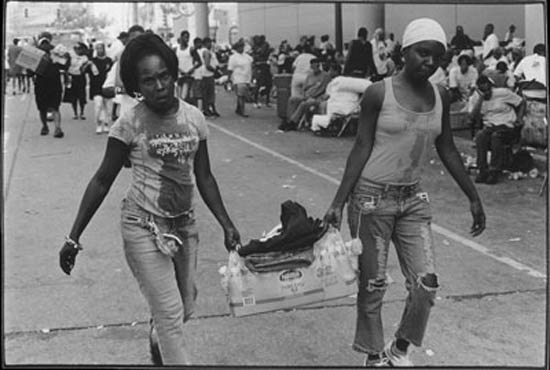
  7Chinno002   8 Chinno015   9 Chinno008

10Chinno003  11Chinno004 12 Chinno022

13Chinno013 14 Chinno016 15 Chinno005

16Chinno020 17 Chinno021 18 Chinno017

19Chinno019 20 Chinno025 21 Chinno035

22Chinno027  23 Chinno026Rev

24Chinno32 25 Chinno33 26 Chinno29-1


To inquire about purchasing one of these images, or any of Alan Chin’s work, please contact: Sasha Wolf Photographs.)

(All images courtesy of Alan Chin/Gamma.  New Orleans. 2005.  Posted by permission.  For more on Alan Chin: Portfolio. Kosovo Diary. Contact: alanschin@yahoo.com))

  • mugatea

    AC, A-1. This work is amazing, beautiful, sad.
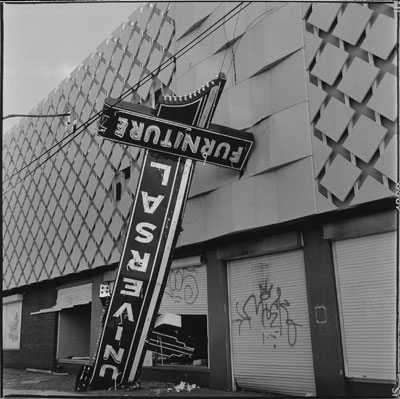
    The furniture store is a perfect way to end the series.
    … this mind blown.

  • michel

    Finally! This is what we should be talking about. Thanks for these, BAG.

  • Susan Moe

    I was immediately reminded of the photos taken by Dorothea Lange during the Great Depression. Your work is impressive and stirs all kinds of emotions. Best photo coverage I’ve seen.

  • Chris

    I guess nobody here will be surprised that Mr. Chin does brilliant work. These pictures do show a lot that somehow gets missed in national coverage involving plastic-faced reporters strapped up in wind-tunnels.
    I don’t want to detract from the value of these photos, but I’ve always been uncomfortable with the use of black-and-white for certain subjects. One effect for me here is that the picture is actually soothing to my mind, as opposed to the disconcerting chaos of the real thing. The scenes filled with sleepless people and days of refuse are more painful to look at in color.
    To compare, people always feel the need to photo concentration camps in BW, which creates a very different image from what you see on visiting one. The first thing I remember thinking at Dachau was that the people who suffered there did so within sight of pretty greenery and “normal” German life. Of course, I don’t know if you can catch that in a picture.
    Several of the more disturbing pictures (dead bodies) definitely have some advantage in BW, though; it somehow allows the mind to concentrate on what we should be looking at, before really realizing what it is. The pictures are so seductive…
    OK. Too many words. Many thanks to the BAG and to Alan Chin for so many things we don’t see in the national media.

  • Tracy

    Merriam-Webster Online http://www.m-w.com/
    One entry found for FLOTSAM.
    Main Entry: flotsam
    Pronunciation: ‘flät-s&m
    Function: noun
    Etymology: Anglo-French floteson, from Old French floter to float, of Germanic origin; akin to Old English flotian to float, flota ship
    1 : floating wreckage of a ship or its cargo; broadly : floating debris
    2 a : a floating population (as of emigrants or castaways) b : an accumulation of miscellaneous or unimportant stuff
    One entry found for JETSAM.
    Main Entry: jetsam
    Pronunciation: ‘jet-s&m
    Function: noun
    Etymology: alteration of jettison
    1 : the part of a ship, its equipment, or its cargo that is cast overboard to lighten the load in time of distress and that sinks or is washed ashore
    2 : FLOTSAM 2

  • Patti F

    I keep thinking of the dustbowl and “The Grapes of Wrath.”

  • readytoblowagasket

    Thank you, Alan, not only for taking these photographs, but for sharing them with this forum. Since Katrina made landfall I have been agitated that visual documentation of this unbelievable and inexcusable devastation has been edited, diluted, and supressed in our reputedly free press. Have these been published anywhere (other than two in Newsweek)?
    The reason I’ve been so upset is because I know something about what “devastation” means. On September 16, 2001, when the mayor said it was okay for the public to re-enter lower Manhattan, I got on the subway at 14th Street and headed downtown. I wanted to go because I didn’t want to be sheltered from the reality of what had happened to my city, to my fellow New Yorkers. I didn’t want to be informed by TV and newspaper images alone, I didn’t want people to clean up the mess for me without having any idea what they had cleaned up. I wanted to see with my own eyes, and I knew there were limitations to my imagination. And about that I was right. No matter how many images I’d already seen–through my own or others’ eyes–I was not at all prepared for what awaited me when I came aboveground.
    My experiences of lower Manhattan after 9/11 were not just visual. When I stepped off the train into the Fulton Street station I felt sheer panic before I could identify why. That’s because it smelled like fire (as opposed to smoke), like get-the-hell-out-NOW! danger, yet the station looked completely normal. The smell was frighteningly close yet nothing around me was burning. I shouldn’t be here, I thought; I don’t think I am brave enough to do this. But I let myself be moved along by the group of strangers heading silently for the exit to the street.
    When I got aboveground I had no idea where I was. For those unfamiliar with Manhattan, Fulton Street is on the east side, a significant distance from the World Trade Center site on the west side of the island. Police barricades and National Guardsmen in camouflage constrained our movements that day. This point was as far west as civilians were permitted.
    I couldn’t recognize where I was because in addition to the jarring sight of the military on my city’s streets there was a 4-inch-thick layer of ash covering every surface. Every surface. The ash muffled our footfalls, obliterated ALL color, and had slid off store awnings in swaths like heavy snow. Alan is right to photograph in black-and-white because color is inseparable from our experience of our surroundings. When color is taken away, we can begin to see. If the photos lull, it is because some of them are too beautiful.
    Utter devastation is its own universe, and direct experience of that universe is the only way to truly comprehend it. It escapes capture in images and defies description in words. We must be careful not to poeticize disaster, which I see happening in this forum sometimes. It removes us still further from the people who lived through it, who are themselves devastated in ways that words and pictures can’t ever fully document or express. Two weeks after my first trip to lower Manhattan, I went again. I couldn’t recognize where I was on that second visit because all of the ash was gone.
    AC said: “I mean . . . the Indonesians had a tsunami, and they still handled it a hundred times better.” That’s sadly right. We (as in the entire country) seem not to realize we should feel deeply ashamed about that.

  • Martin

    Wow, those are amazing. Thank you so much, Alan.
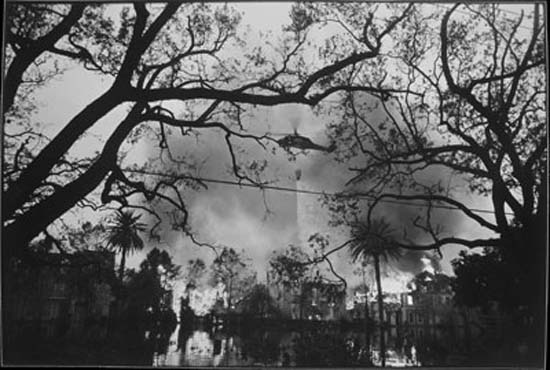
    I have a question about the 19th image here, the one with the tree branches. With the others, you pretty much can instantly figure out more or less what you’re looking at — with this one, you can’t. What is the picture actually of? The cloud formations behind the trees resemble a nuclear mushroom cloud, and the image is vaguely/indirectly almost more powerful than the others because of that (possibly I overstate). But I may be misreading it.
    I guess my question is, could you provide just a bit more information about what is going on there?
    Thanks again.

  • gleex

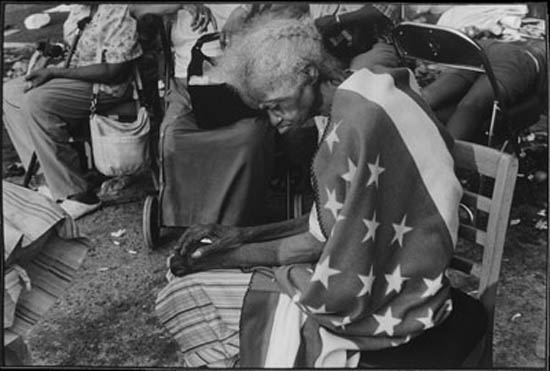
    The woman wrapped in the American flag (blanket) is a beautiful picture. She is alone in a crowd, no doubt resting and thinking.
    The second main picture is great. The small child, likely older brother, likely father holding child all line up by height. It really hits the inter-generational family bond, and family poverty, and perhaps how that family will all come to have a similar world view. It is also striking how the elderly persons are sitting, and there are no other chairs, not even for a little four year old boy.
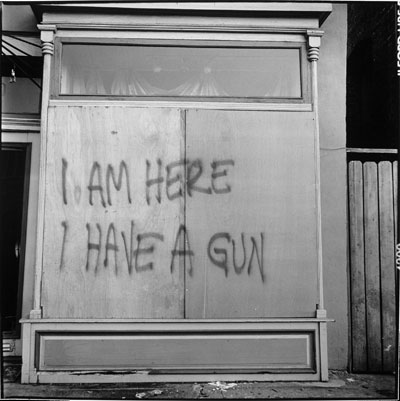
    Oddly enough the photo’s with the spray painted warning graffiti is just as expressive as some of the looks and expressions on peoples faces. The words really leap out and put thoughts, fears, etc into the environment. At the same time it is a bit ghostly.

  • http://www.neilcavanagh.com Neil

    One that jumps out for me is “I AM HERE.” I am here – but there is no one there. Ghostly indeed. I have a gun. It may have been a desperate ploy of self-protection against danger, but the message itself plays like a warning from an unseen, nightmarish bogeyman in the closet, from some childhood scare story. An invisible lurking menace.

  • http://www.livejournal.com/users/vicfitz82 Victor F

    I agree with Chris: black and white news images take a lot of impact and immediacy out of photos. I like it and I don’t. A picture could be gritty in color, and still be gritty in grayscale, but what you focus on when everything is gray is the forms and tones as opposed to the colors. The images become timeless and take away from the sense of immediacy.
    Black and white leads to a more reflective take on news while color emphasizes the immediate. Perhaps because we’re used to seeing old black and white pictures, perhaps because of the lack of color contrast, I don’t know.
    How many days was Mr Chin covering the devastation? How did the people in the photos react to the camera? Was it difficult to be in the middle of all of that? How exactly does a photographer cover something of such magnitude?
    Those are powerful, sensitive, intimate images from a large disaster. Well done.

  • PTate in MN

    Thanks to Alan for sharing these pictures! I have seen other powerful images–I am haunted by the one of the body floating in the canal–but these capture the experience of the displaced–the resignation, the shock, the disorder.
    I was at the Tate Modern in London shortly after the discussion last June in a gallery dedicated to political art, specifically, anti-war pictures. I was struck with the realization that artists have not been creating accessible anti-war art. In this, they have as passive and self-absorbed as the SCLM.
    Then I remembered Alan Chin’s photographs from Iraq. His photos–his observations with a keen eye–are among the most profoundly anti-war statements that I have seen.
    And these pictures reinforce my respect for his skill.
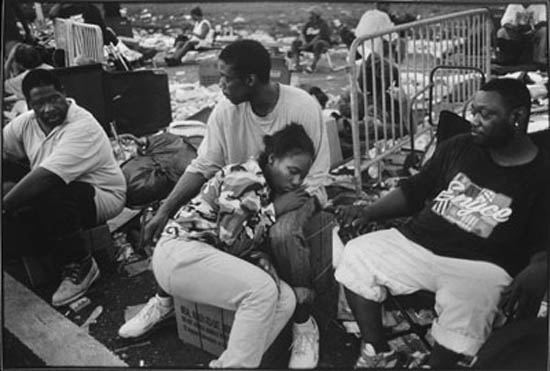
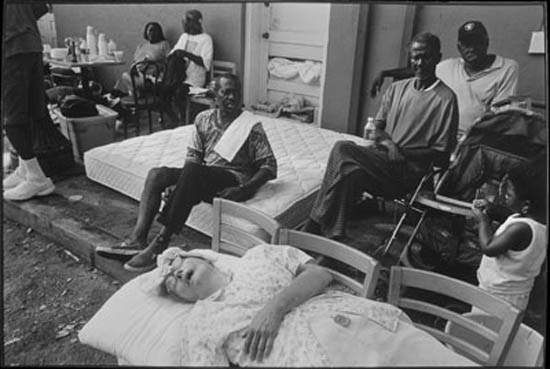
    The picture that caught my eye is the one–sixth of the thumbnails-of three men and a woman, sitting, waiting, in the midst of chaos. The woman is asleep, her head resting on a man’s shoulder. She is vulnerable, and the men surrounding her are watching over her, exhausted but protective. It makes me see the enormity of humans ripped from their surroundings.
    Thumbnail 13 reminds me of the New Yorker cover we were considering yesterday. It highlights for me the sentimentality of the New Yorker cover.

  • Diane

    Thanks for these great images, Alan. I think the B&W decision was a good one. These images can sit side-by-side with depression-era photos and fit right in. I do hope some kind of book/site of the Katrina images can be made public. I’m thinking the dead woman doesn’t look so unhappy to be gone…

  • Alan Chin

    To start, I want to clarify what I said about Indonesia and the tsunami; I was on the phone with Michael Shaw and I threw that out as we were talking about the impact of Katrina. I should add that I was not in Indonesia, and I don’t really know that they handled that disaster much better than we did here. But I think my point is clear, that a great power like the United States obviously has the resources, the trained units, the organizational capacity, to have responded more effectively than we did.
    Regarding the 19th photo with tree branches, that is houses in waist deep water that were set on fire by looters, near St. Charles Avenue. very possibly it could have been caused by broken gas mains or other causes too. but the firemen at the scene said that it was looters. A helicopter is dropping water to prevent the fire from spreading to neighboring houses. It looked and felt like a scene from “Apocalypse Now.”
    How many days was Mr Chin covering the devastation? I actually made two trips, these photos are all from the first, Sept. 2 to Sept. 7. Then I went back Sept. 11 to 17.
    How did the people in the photos react to the camera? Some people did not want to be photographed in, what, for them, was a humiliating or embarrassing situation. I respected that and left them alone. Most people, however, wanted their plight and suffering to be seen by the world, and, were actually amazed that the story was getting coverage in more than just the local New Orleans or Louisiana media.
    Was it difficult to be in the middle of all of that? It was difficult in the sense that you simply do not expect to see such misery and unnecessary suffering in a major American city, even one as normally poor, corrupt, and disorganized as New Orleans.
    How exactly does a photographer cover something of such magnitude?
    Actually from the practical point-of-view this was easy. Fly to Baton Rouge, rent a car, go by the Wal-Mart to stock up on supplies, and drive into the affected area. Because that area was large, there were a lot of places to go to and investigate, to see what was going on. I had been in New Orleans only six months ago so I know my way around well enough, and the threat of looters and violent types, though real, was vastly over-rated. I mean, there was one policeman and one National Guardsman shot, neither fatally. That’s bad, but hardly that bad.

  • MonsieurGonzo

    Mr. Chin’s choice of Black & White was inspired.
    in my opinion this medium forces the viewers, as well as the photographer ~ to focus on pure composition, the presence and absence of light ~ rather than spectrum / colour attention.
    fwiw, my favourite is image chinno33.jpg where Mr. Chin gets close, then gets closer And i would enjoy seeing more portraits of the victims, rescue workers and static scene watchers done in this fashion…
    …because it is in Mr. Chin’s B&W portraits that we rise above not only colour towards pure composition; here, this artist reveals character and the gamut of emotions these people express, therein.

  • http://www.kathryncramer.com Kathryn Cramer

    It seems to me that the choice of black and white plays with the temporal dislocation we experience when we confront the New Orleans disaster. I have this continual feeling that this is the sort of thing that happened in my grandparents generation, not in my own, except when I wake up in the morning, it’s still there and it’s still now.
    One additional distraction of the use of color is that adult viewers are fairly good at gaging the era of a photo by the nature of the color processing. The use of b&w eliminates that temporal cue as well.

  • Chris

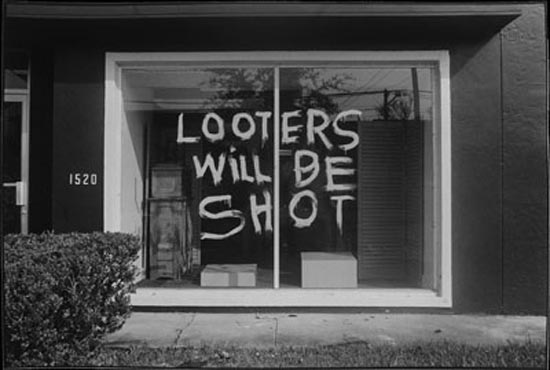
    Poking around Fables of the Reconstruction, I saw a link to an amateur do-gooder’s site with a lot of pictures, some showing that some of these themes (“LOOTERS WILL BE SHOT”) are pretty widespread.
    readytoblowagasket – you paint vivid pictures with your words.

  • Asta

    I am so sorry I made that snarky post months ago questioning Alan Chin’s authenticity. I was humbled then by his most sincere email to me, and I am further humbled by the images he has now shared with our gracious host Michael Shaw.
    I was so jaded way-back then, but this site has helped me regain my soul, and some HOPE! because through this internet portal, I have seen the TRUTH finding its way to the light of day. By the means of a camera lens, a welcoming web site, reality breaks through the darkness to find the breath of life.
    Both Michael and Alan have a sensitivity, a thirst for truth, and a professional integrity; such ethics/standards are so profoundly lacking in the mass media. This blog is not about staged performances or scripted speeches or photo-ops or surrealism. This is about Life, and this site delivers.
    The only question remaining is — how do we honor the works that have been offered here? How do we carry their torches?

  • readytoblowagasket

    Thanks, Chris, for the kind words and for the links. I can’t get enough of the pictures, whether b&w or color.
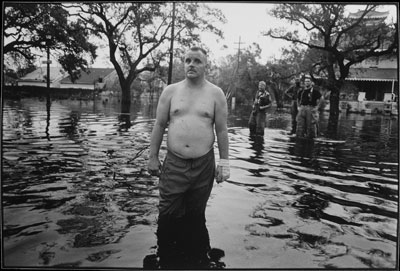
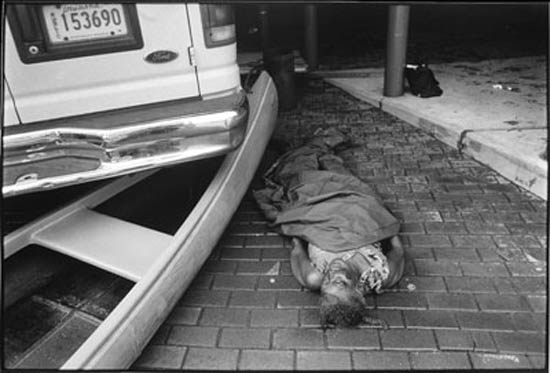
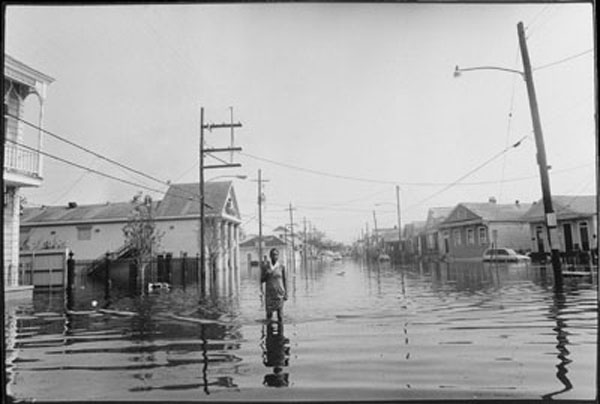
    The more I look at Alan Chin’s photographs here, the more they evoke: I am reminded of Civil War era death portraits (especially #05, whose black tarp looks like her makeshift mourning dress) as well as Civil Rights era unrest (#06–two women, #03-1–blood on the street). Timeless is right! Also, some are iconic of the Deep South, like #20, a lone African-American standing in some no-name flooded, deserted small town. How many times have we seen some of these same images of poor black Americans? Like we have gone nowhere in a hundred years. I’d like to see an exhibit of some of these photos alongside photos from the flood of 1927.

  • pjr

    These pictures should have been the backdrop to ‘Brownie’s’ disgusting appearanc before Congress today. He simply couldn’t have continued his liefest with these images speaking volumes about the depth of his incompetence.
    Powerful, disturbing and possibly the best evidence yet of the utter failure of BushCo to deal with the tragedy.

  • http://profile.typekey.com/buda_jenn/ buda_jenn

    Thank you so much Alan for sharing your extraordinary photos with us on the Bag.
    Stuck by all of them… the elderly woman slumped in the flag says it all.
    I agree… in this day and age a color photo says look and move on to the next page.
    Thanks again.

  • darkymac

    Elegiac.
    The eye slows down in your essay Mr Chin, as for a sad song.

  • michel

    Many of these pictures evoke a religious element–the man standing in the water looks like a kind of reference to baptism, the folks on the overpass look like the Israelites fleeing Egypt, the folks lying on the cot like the holy family, the folks sitting in chairs like a kind of congregation, the woman with her hand on her child’s head a madonna, the furniture sign a crucifix. Part of their power, in other words, is that they bring back to haunt us part of our own tradition as a (nominally, anyway) Judeo-Christian nation. These are our brothers and sisters, the ones Jesus said we will be judged for helping or not helping, the ones that the Torah claims are strangers that need our help and love. If ever the gift of tears were given by God, it is in these pictures. If ever an answer to the question–if not now, when, if not me, whom–were possible it is after seeing them. May Jesus, may God move us in these photos to see that these folks are the body of Christ, the people of God and it is our duty to do so much more than talk about their images. Our humility, which speaks to us from these fine documents, must turn to peaceful but not passive action.

  • martin

    very much struck by commonality of despair/resignation in photos. Broken-backed (black) people slumped. ‘Cos they are black/white photos, light seems to emphasise this more.
    On a different level, poster tracy commented on the etymology of ‘flotsam’: Meriam-Webster also has this as a definition of the word ‘government’. ” obsolete : moral conduct or behavior : DISCRETION”
    .
    Increasingly, I feel the judge of a societies worth should be how you treat your old people, your poor people and your sick people. Not a new or original idea, but whatever happened??

  • Tracy

    Caption for #6: “I survived Katrina but all I got was this lousy flag.”

  • Sharon Rosenzweig

    The woman with the flag blanket over her shoulders– is she Milvertha Hendricks? A photo of her outside the Convention Center on Thursday Sept 1 was widely punlished. In that one, the flag blanket is wrapping all but her face, and I thought it was the central iconic image of the whole rotten tragedy. In yours, she looks far worse. Do you know when you shot that? Does anyone know what happened to Milvertha Hendricks?

  • bob crane

    i would really like to see these photos on a larger scale in person. there’s a dramatic connection with good photography like this when a fine print is staring at you in all its clarity on the wall, that is only really hinted at on the web and in newsprint. these are shockingly rich photographs, which through the correct choice of using b/w, captures what should never have happened to n’aleans quite starlingly and clearly. i need to restrain myself when talking about the actual hurricanes, i find it far too upsetting that this country can’t (or wouldn’t) respond quickly and effectively in a disaster. and to allow this to happen to this extent among the least fortunate among us is unconscionable.
    thanks for sharing these & to the bag for the forum. it’s rewarding to have the opportunity to see a body of work like this in one shot.

  • Alan Chin

    yes, according to AP the old woman in the American flag blanket is Milvertha Hendricks, 87 years old. The AP photo, in color, by Eric Gay of San Antonio, was published widely. Mine, in B+W as you see here, ran in Newsweek. I took my photo on the morning of Saturday, September 3rd, at the Convention Center. So she looks far worse, because it is two days later than Eric’s photo. She and the thousands still at the Convention Center were finally evacuated later that day. I do not know what happened to her after.

  • Tracy

    Sharon Rosenzweig, it looks like the same person. In the color picture you saw of her she is in front of the convention center in the rain on September 2. Hopefully, she got out within a few days. Alan was in N.O. from Sept. 2 to Sept. 7 and from Sept. 11 to 17. I think she looks bad in Alan’s picture because it’s impossible to sleep in that chair. She looks pretty good for 84 years old, though. Here’s the color picture:
    Milvertha Hendricks, 84, vítima da tragédia em Nova Orleans
    http://www.dw-world.de/dw/detail/1,1581,1699858,00.html

  • http://ban-sidhe.com/blog/ Mathieu

    I have a question: why black & white?

  • Peggy Schmitt

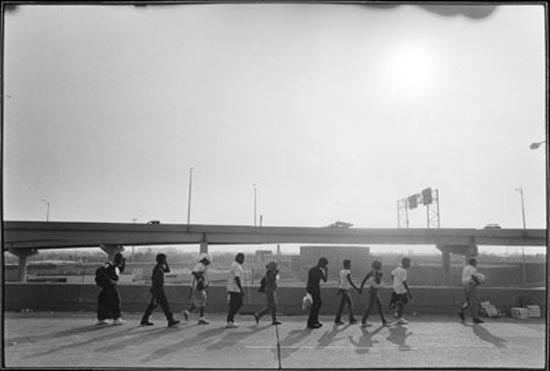
    #18 Are these people in a road or on an overpass? The shadows are beautiful but I don’t want to think about long dark shadows. Where are they going? to be evacuated? The two holding hands gives me hope that they are heading toward a heliocopter to be taken to a safe place. I looked at all the photos, but this one haunts me. Thank you. Peggy Schmitt

  • Alan Chin

    to address the issue of b+w vs. color:
    like most working photojournalists today, i own and use digital cameras, for the sake of meeting deadlines and so forth. my photographs from Iraq previously on this site were all color digital photographs. however, being a bit of a Luddite and a “purist” (whatever that means!) i still have a love for traditional photography and its aesthetic and technical qualities.
    so i flew down to new orleans with both digital and film cameras. my first day there, september 2nd, i shot with both. that night, reviewing my digital photographs on my laptop computer, i was struck by how similar they looked to what most of my colleagues were doing. the imagery was powerful, but….something was missing. and i realized that had to do with the modern American landscape, how we live in a society saturated with advertising, with red Coca-Cola signs and green Starbucks logos and so on. It’s vitally important, of course, to acknowledge this and document it and explore it, but in New Orleans, for me, it seemed to be besides the point.
    So the next day and subsequently, I left the digital gear in the trunk of the car and used only black + white film. A fair criticism might be made that this is “arty” or filled with pretense or whatever. Be that as it may. I wanted to shoot the human story, the unadorned emotion and reality of what was occurring. The fact that I was not on assignment also meant that I didn’t have any editors to please or to follow any instructions. So I was free to photograph entirely as I wanted, and, the film cameras are still at this point more organic to use, more capable of producing results that these scans online cannot do justice to. I wish you could all see the actual prints.
    It did mean that by Tuesday, Sept. 6, I was thinking about the magazine deadlines at the end of the week. The city of New Orleans was largely emptied, and frankly, to photograph the military and rescue forces that had arrived en masse, and were doing very competently what they should have been doing days before, held little interest for me at that moment. So I came back to New York, developed my film, made prints in the darkroom, and presented them to Newsweek (with whose photo editors I have a good relationship) and they were interested enough to run two of these, #6 and #25.
    Black and white does make things more beautiful than they are in reality, perhaps, by emphazing graphic elements, and doesn’t provide as much information, data, in the strict sense that you just are not as able to put yourself in the reality of that moment as much. But in this case I think that it is more effective in the symbolism, in the sense that my photos of 2 or 20 people have to tell the and represent the experiences of 2000 or 20000.
    There simply aren’t that many photojournalists working in the old ways any more. There’s plenty of color photography to look at, from my friends and colleagues. I feel strongly that for the sake of variety, of different points of view, it’s important to use all the tools we have, rather than only the standardized set.
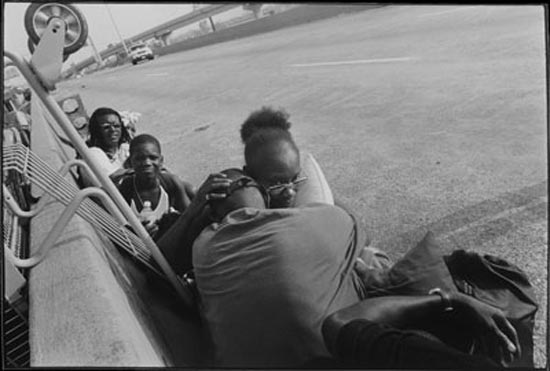
    #18 is of people, yes, headed towards a helicopter that had landed on the elevated Interstate 10 expressway. The elevated highways became narrow lifelines that ran through the city; people headed to them or were taken by boats to them and there they were finally dry and accessible to be rescued. Helicopters used the highways as impromptu landing zones, to drop off supplies and take people out. With a car, they were also the only way for me to get to parts of city that were otherwise entirely submerged. It was an eerie, and yes, haunting feeling, to be up there looking down at the flooded neighborhoods and floating bodies.

  • sharon Rosenzweig

    Alan, had you seen Eric Gay’s picture when you shot yours? Did you recognize her?

  • Alan Chin

    sharon, no, i had not the AP photo, it was the editors at newsweek who saw that she was the same woman and told me her name. i had not wanted to bother her, so had only taken two frames, from the side as you see, quickly before moving on. it was only when i looked at my contact sheets that i realized that it was a powerful image.
    actually, other than the thursday and friday NY Times (Sept. 1 and Sept. 2) i did not see many photographs before going. but the thursday front page if i remember right, of the dead body with a question mark T-shirt in the water, and the reports on NPR convinced me that what was happening was beyond even the usually terrible scope of a hurricane.

  • Roya

    Wow, what powerful images.
    There’s a unflinching honesty to them that makes me dearly wish they were being projected over Michael Brown as he gave his congressional testimony. Someone above mentioned Dorothea Lange and that is exactly what I was put in mind of as well.
    Mr. Chin, excellent work.

  • John Powers

    I was living in an issolated area when the Christian Science Monitor first started publishing in color. That was my major source of news then and it took me about a year to grow to like the color photography in it. I love photographs and very much like color photographs, yet still see advantages to B&W in news photography. Detachment is a word that comes to mind, yet that doesn’t quite express it. It seems that B&W reminds me that photographs are fragments. I guess it’s a little like the old folks complaining that the pictures were much better with stories on the radio.
    My first reaction, Mr. Chin was to notice that you still know how to make great B&W photographs. Your eye alls people like me to see what we otherwise would miss. I thank you.

  • The BAG

    Alan,
    It seems my readers have mostly focused on your wonderful photos, and consequently have been reticent to engage you as someone who was “on the ground” following the Katrina disaster and thus available to us as an eyewitness. (This is in contrast to the discussions we had with you about your experience in Iraq, where my readers felt quite liberated to ask/confront you on the politics of your role and what you were witnessing.) In that spirit, I’ve got a few things on my mind.
    First some background:
    The major news over the past two days is that the reports of crime and mayhem in N.O. in the immediate aftermath of Katrina have been greatly overblown. NYT.com has a story today saying that: “… the rumor of crime, as much as the reality of the public disorder, often played a powerful role in the emergency response.” The report goes on to say that the New Orleans police turned out to be the source of much of the disinformation.
    One story that has been widely referred to (demonstrating the supposedly violent atmosphere) was actually published by the National Press Photographers Association on September 8th. The story, titled Photojournalists Covering Katrina Fall Victim To Growing Violence, Chaos – (link), is quite sensational (in photos as well as words) in describing how photojournalists, in particular, were either subject to, or fearful of violence. At one point, the article even likens the working conditions to “being in a war zone.”
    (I’m particularly interested in your thoughts on that latter observation, given that you’ve recently returned from three months IN AN ACTUAL war zone.)
    So, I’ve got a couple of questions:
    1. To what extent, if any, did you encounter “the rumor” of crime? What were the sources? Did you experience the police creating this type of atmosphere? What’s your overall take of the NYT story?
    2. What is your opinion of the NPPA article? Is it possible that the story is factual correct, but the tone of it is somewhat hysterical? (I would assume you know, or know of, many of the photographers mentioned.) Do you have any more to add about their accounts?
    3. I know you’ve touched on this subject somewhat already, but at any point, or points, were you actually threatened?
    4. If you feel like the danger factor was overblown, how would you account for it, and what was the media’s role and responsibility relative to the perception that was created?
    (Finally, this is the snark in me coming out:)
    5. In spite of the fact your images are so moving — and particularly sympathetic to a liberal audience — are you surprised (given this is the blogosphere) that you haven’t received much constructive criticism of your images? Given the fact you haven’t, what kind of constructive criticism would you offer the work, and/or what would you have done differently if you had another pass at it?

  • Alan Chin

    good questions, michael, let’s confront some of the ugly realities of Katrina.
    on the wednesday and thursday, (Aug. 30 and Sept. 1), you had the photos and stories that were in the NPPA piece. you had dramatic scenes of chaos and reports of violence. as i mentioned before, that’s why I mobilized and flew down on friday.
    but even as I did, i was aware, as all good veteran combat correspondents should be, of two seemingly contradictory rules-of-war: 1) it’s probably all a bit exaggerated, and won’t be as bad as they say: when someone says “Oh my God they burned down my whole village and killed everybody!!!” that usually means they burnt down 12 out of 30 houses, say, and killed 50 out of 300 people. 2) the corollary to rule #1, which is, if, as in the above hypothetical example, if even a fraction of what somebody is saying is true, then it is very, very bad indeed, and absolutely very, very important, even if not quite as apocalyptic as first thought.
    so you always have to keep these “rules” (they’re not really rules, of course) in mind when you evaluate any news reports or rumors coming out of the “fog of war.” and you always, to the best of your ability, have to check out each report or rumor yourself to see if it is true. Photographers can’t just quote people. We can’t do our jobs over the phone. We have to go, and see for ourselves.
    what was clear to me about New Orleans and Katrina, even as we were on the plane flying down, is that the always delicate balance of race relations and law and order HAD broken down. Did this actually mean that it was really urban warfare? obviously NOT. why not? because, yes, we heard the reports, but no direct radio recordings of gunfire, no actual photos of multiple bodies killed by gunfire, no actual images or recordings of these reported armed crowds of looters, etc. One sniper does not make urban warfare. BUT, and this is critical, in the USA, as opposed to Iraq, even one sniper means that civil society HAS collapsed, because our standards of acceptable violence are so much tighter in a peaceful paradigm. Frankly, we were joking about if we needed to bring flak jackets and to tape our cars with big “TV” signs and even the orange air recognition panels (so you don’t get hit from the air by an Apache helicopter!), that kind of war zone stuff.
    So imagine my surprise, when we got there, and journalists WERE doing that! armed guards! TV signs! what a joke. i was with colleagues (tyler hicks from the NY Times, thomas dworzak from magnum, laurent van der stockt from gamma) and we thought the whole get-up was so ridiculous that somebody taped the sideways “V” which is the NATO vehicle recognition symbol and wrote “KFOR” (the Kosovo peacekeeping force acronym) on a car as a wry joke. We saw the first National Guard soldiers and vehicles on the streets and we joked, hey, they aren’t armored, they’re going to be vulnerable to IEDs! (improvised explosive devices) and so on. We even joked that one TV crew’s equipment looked like cased anti-tank TOW missiles.
    Now the point of all this is, c’mon, we saw TV crews filming crowds of people from above and far away, afraid to go into the crowds without armed guards. We did without guards, of course, and it was fine. Now, it is true that we went by the Convention Center at night, pitch-black without electricity, our headlights illuminating all those packed people in darkness, and the police told us not to go further and that it was dangerous and at that moment, we agreed, it didn’t seem like a smart thing to do. But in the daylight, a little bit of common sense and you should be OK.
    I didn’t get there until Friday, and the worst was over by then. wednesday and thursday had been the bad days. One photographer I know was told by the police to get a gun and shoot anyone who tried anything on him. Now, why was he told this by the police themselves? we know why. because he was WHITE. and here’s the key: do you think the police, even a black policeman, would have told a BLACK photographer to get a gun?!? NO.
    so as always, it was the PERCEPTION that mattered as much or more than REALITY. there were rescue teams stalled on the highways outside the city because their commanders thought it was too dangerous to go in. the NY Times reports how the non-combat National Guard unit of 200 soldiers at the Convention Center, only partially armed, retreated rather than tried to calm the crowd. Let’s break that down, was that smart? was it the right thing to do?
    the commander of that unit, if he only had 50 rifles for his 200 men, might make the following calculations: 1) i can try to restore order with my inadequate force. in doing so, two very bad things may happen, 2) i’ll lose some of my own men. no commander wants that 3) potentially even worse, i might really have to open fire on the crowd. we are blaming them now for not reacting quickly and decisively. but what would we be saying if, like in Iraq, that commander had restored order at the Convention Center immediately, but at the cost of dramatically killing 10 or 20 mostly black people? So, he did the not-so-brave, but perhaps sensible thing, and did nothing and retreated, while innocent people suffered.
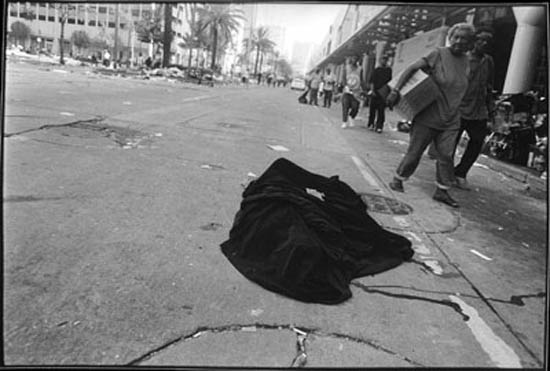
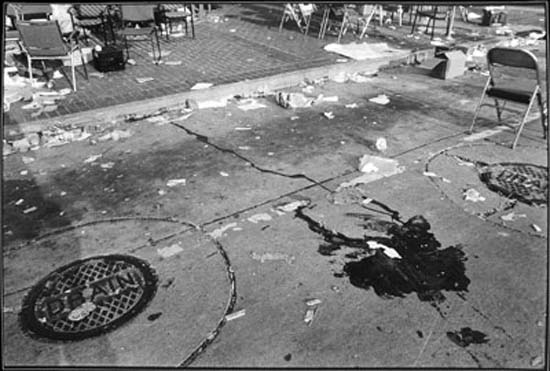
    In my photos #7 and #10 you do see the covered body of a man at the Convention Center who was killed by gunfire, and then the bloodstain after the body was removed. We were told that he was shot to death by the police at night for an unknown reason. No way to verify that. Clearly he was killed by violence, though, with the way that blood is on the ground. He was the only one I saw. All the other dead I saw (not that many) were from the effects of the storm.
    An interesting point on this: it looked like war, in some ways. there were abandoned and looted cars everywhere, on the streets, the highways. shattered glass, doors open. Thomas asked me, only half-jokingly, if I thought that the people had been stopped, pulled from their cars at gunpoint, and executed. OBVIOUSLY NOT! they had run out of gas and left their vehicles. and then looters had their fun with the cars. But, IT LOOKED like something far worse could have happened.
    And, with the exception of those of us who have covered wars and conflicts, most of the journalists and TV crews on the streets had no experience of this kind of thing. What to me gets cynically processed as “breakdown of law-and-order, high tension, moderate looting, minor violence, low casualties” might, in someone else’s mind, be considered much, much worse.
    For the mostly white police and military forces and media, it’s easy to blame or highlight the looting and the violence from mostly black people. In the best of times New Orleans has a very high crime rate, an under-staffed and historically corrupt police force, and a difficult balance of peace bewtween whites and blacks. So in time of crisis, this balance DID collapse. In 1927 the levees were dynamited on purpose to protect the white neighborhoods and the poor black areas were flooded. Everybody there knows this.
    As for myself, I felt the danger of being shot by mistake by the police (“blue on blue,” “friendly fire”) was much greater than any potential threat from “hostiles.” I am deliberately using the military terminology. Several times I was stopped at gunpoint by police or military until they checked out my press credentials. Now, for me this is no big deal. they’re young, they’re nervous. but other journalists who had not been through this kind of experience before were scared, angry, and upset.
    At the end of the day, the story was the needless suffering of poor, black, innocent people, not violence or looting. If that unit at the Convention Center had been immediately reinforced with a larger and better armed unit in conjunction with a concerted relief effort, hours, and not days, later, it would have been just fine. THAT CRITICAL DELAY and the suffering of tens of thousands, and perhaps the deaths of dozens, which resulted from it, that’s the issue.

  • deckko

    Mr. Chin, many thanks for the photos and comments. The b/w shots are beautiful and mournful.

  • mugatea

    AC, thanks. It is such an experience to read your opinions on all this.
    So valuable I’m concerned Michael might create a “BagSelect” and place you and your photos behind a firewall for a toll.
    Bag deserves thanks as well.
    ; )

  • MonsieurGonzo

    Mr. Chin: “I wish you could all see the actual prints…”
    …that would be a treat! even moreso if you would/could return and focus on portrait – like compositions of people = once evacuees, now returnees; ie., more -or- less looking directly at you (us) framed by the remnants of their obliterated existence in the fashion of Mapplethorpe and his now famous / infamous B&W exposition that revealed so much about them: just plain working folks and stunned America.

  • The BAG

    Mugatea,
    The internet and (gasp!) the ’sphere may be all too quickly going commercial. To BAG readers I say: “Welcome To The Free World!”
    To Alan, I say: “You’re a treasure.”
    (…By the way, the response to your images has been tremendous. The entry has drawn about 8,000 visitors and 15,000 page views in two days, including about 2,000 that saw it based on the images and “micro-essay” I contributed to the Huffington Post.) (I guess, if the BAG is free, I’m not above a shameless plug here or there.)
    And, for the really dedicated BAG readers who are following this thread and had the benefit of reading Alan’s last comment, I’ll let you in on a rumor: It’s possible you haven’t seen the last of Alan’s creative output from New Orleans.
    (…Alan: Sorry if that puts you on the spot, but I know you really love all these blogging hijinks.)

  • cj

    There are so many photos here that say so many different things that I don’t really know where to begin….Alan, thank you for providing this series of photos that–at least to me–reflect the range and scope of what many in New Orleans had to experience while the rest of us watched from our surreal 24 hour tv perches. In general your use of black and white has transformed this hurricane disaster into a universal exposition on human suffering and perhaps the limitations of human relief. Of all these insightful photos, I was drawn to number 18–the people walking with their shadows, and the bridge in the background. I immediately thought of the final scene from Bergman’s “The Seventh Seal”. Your photo is both stunning and thought-provoking. People walking somewhere–toward an apparent destination dragging their growing shadows behind them. Although the line of people seem beaten and burdened by their ordeal, the young couple holding hands (and also making a “v” for victory, perhaps) radiates a sense of hope (if not determination of the spirit). Thank you again for these photos.
    cj

  • Sonda Gabriel

    Thank you so much Alan for these incredible images. I personally think the use of black and white was
    perfect for these photos, which are some of the
    most powerful I have ever seen.

  • Debbie

    I think that the pictures being done in Blk/wht are more powerful than done in color. Like someone else said they remind you of photos from the past, like during the Depression era. They look like pictures that would have been shown in Life Magazine. My favorite photo is the one of the old woman wrapped in the flag style agfhan. Very powerful.

  • bob crane

    alan,
    i know i’ve brought this up everytime you show your photos here, and you mentioned in passing above that you wish we could see your actual prints, so i’d like to ask directly: is there ever a chance to show your work in person, whether that would be in a gallery setting or otherwise, and if so where?
    thanks,
    bob

  • Santiago Vazquez

    Alan,
    It looks as if there is a clamor for you to present an exhibit of your photos. It may be time to do so. BAG should advise which cities some of these folks are in, but maybe a NYC show soon, just as a start?
    Sounds like there is a demand for it , no?
    -santiago

  • k

    #3, the confusion, and #4, determination and anger.
    B&W make the images more timeless, less likely to be wiped away by the next short term tragedy.
    Is B&W easier to remember? More referential to the archetypical?

  • Sadie

    I am one of the hurricane katrina survivors. Just thinking back of that day in my mind brings tears to my eyes. I don’t like to think about it. Those pictures disappoint me greatly. Don’t misunderstand the shots are great but notice that everyone in those shots are BLACK. You can not imagine what it felt like hearing rumors about where you can go to get help and finding out it was just a dead end, having guns pointed in your face just for standing there waiting to get help or even asking a question. I can only thank God above for letting me and my family survive. Having to sleep outside with hundreds of people unaware if we were going to live or die. That experience will hunt me forever. I’ve lived to tell others about it. For the most part I think that in a couple of months everyone will have forgotten about US. We still need everyones prayers and support. Its so hard starting over with nothing to start from. There are children still separated from their parents, people are still homeless and hungry. My question is: WHAT ARE WE GOING TO DO? I think that GOD’s message to AMERICA is its time for a change.

  • Channa Horwitz

    I love Bag News and have been a follower from the beginning

  • Mary Warshaw

    This is a powerful and terribly important blog. Thank you so much Michael

  • debbie terhune

    I received the below article in an email and have received many with the same theme blaming the victims, they are always from my republican friends. I do not understand them. Are they so into protecting their party and president that they have no compassion for those less fortunate than themselves? Their president and party has been busy looting the govt and privatizing everything with contracts going to their cronies, so when FEMA is needed, it is too destroyed by them to be effective. So blame the victims.
    Subject: Article by Rev Jesse Peterson
    Moral poverty cost blacks in New Orleans
    ) 2005 WorldNetDaily.com
    Say a hurricane is about to destroy the city you live in. Two questions:
    What would you do?
    What would you do if you were black?
    Sadly, the two questions don’t have the same answer.
    To the first: Most of us would take our families out of that city quickly to protect them from danger. Then, able-bodied men would return to help others in need, as wives and others cared for children, elderly, infirm and the like.
    For better or worse, Hurricane Katrina has told us the answer to the second question. If you’re black and a hurricane is about to destroy your city, then you’ll probably wait for the government to save you.
    This was not always the case. Prior to 40 years ago, such a pathetic performance by the black community in a time of crisis would have been inconceivable. The first response would have come from black men. They would take care of their families, bring them to safety, and then help the rest of the community. Then local government would come in.
    No longer. When 75 percent of New Orleans residents had left the city, it was primarily immoral, welfare-pampered blacks that stayed behind and waited for the government to bail them out. This, as we know, did not turn out good results.
    Enter Jesse Jackson and Louis Farrakhan. Jackson and Farrakhan laid blame on “racist” President Bush. Farrakhan actually proposed the idea that the government blew up a levee so as to kill blacks and save whites. The two demanded massive governmental spending to rebuild New Orleans, above and beyond the federal government’s proposed $60 billion. Not only that, these two were positioning themselves as the gatekeepers to supervise the dispersion of funds. Perfect: Two of the most dishonest elite blacks in America, “overseeing” billions of dollars. I wonder where that money will end up.
    Of course, if these two were really serious about laying blame on government, they should blame the local one. Responsibility to perform  legally and practically  fell first on the mayor of New Orleans. We are now all familiar with Mayor Ray Nagin  the black Democrat who likes to yell at President Bush for failing to do Nagin’s job. The facts, unfortunately, do not support Nagin’s wailing. As the Washington Times puts it, “recent reports show [Nagin] failed to follow through on his own city’s emergency-response plan, which acknowledged that thousands of the city’s poorest residents would have no way to evacuate the city.”
    One wonders how there was “no way” for these people to evacuate the city. We have photographic evidence telling us otherwise. You’ve probably seen it by now  the photo showing 2,000 parked school buses, unused and underwater. How much planning does it require to put people on a bus and leave town, Mayor Nagin?
    Instead of doing the obvious, Mayor Nagin (with no positive contribution from Democratic Gov. Kathleen Blanco, the other major leader vested with responsibility to address the hurricane disaster) loaded remaining New Orleans residents into the Superdome and the city’s convention center. We know how that plan turned out.
    About five years ago, in a debate before the National Association of Black Journalists, I stated that if whites were to just leave the United States and let blacks run the country, they would turn America into a ghetto within 10 years. The audience, shall we say, disagreed with me strongly. Now I have to disagree with me. I gave blacks too much credit. It took a mere three days for blacks to turn the Superdome and the convention center into ghettos, rampant with theft, rape and murder.
    President Bush is not to blame for the rampant immorality of blacks. Had New Orleans’ black community taken action, most would have been out of harm’s way. But most were too lazy, immoral and trifling to do anything productive for themselves.
    All Americans must tell blacks this truth. It was blacks’ moral poverty  not their material poverty  that cost them dearly in New Orleans. Farrakhan, Jackson, and other race hustlers are to be repudiated  they will only perpetuate this problem by stirring up hatred and applauding moral corruption. New Orleans, to the extent it is to be rebuilt, should be remade into a dependency-free, morally strong city where corruption is opposed and success is applauded. Blacks are obligated to help themselves and not depend on the government to care for them. We are all obligated to tell them so.

  • Jim

    In Michigan when the winter approaches I take out my winter clothing,check the pipes,put snow tires on and prepare for a rough winter.
    Yet it may be a mild winter? It may snow very little!! But I pre-pare for the worst.
    Now for the likes of me I can’t figure out why people in the line of Katrina stayed in their homes without water and food!! Why so many people could be so dependant on someone else to furnish them with common sense items? As a relief worker who has been down in Biloxi,MS. since September 2005 I have had the opportunity to ask why? Do you want to know why?

  • Jim

    One more thing! 99% of all the relief workers in Biloxi happen to be white.
    From “Hands on USA” to the Salvation Army and other Faith based groups, are white people helping blacks. The racism and distrust of whites are based on southern hypocrisy and the likes of Farrakhan and Jessie Jackson. Hopefully as we continue the work in Biloxi, MS. Barriers will fall and as the light comes in we will all learn that we are one in country and kind! God Bless Biloxi, Pass Christian, Bay St.Louis and Gulfport Mississippi.

  • Channa Horwitz

    Bag News is the best. I feel lucky to receive it.

  • http://www.bonewhistlegraphics.com johnsnakecusak

    The photos are fantastic, thank you!! In the blog I believe the conjecture is made whether the mainstream coverage of Katrina was sanitized or cleaned up a bit for the public. This is something that I wondered about at the time. I kept thinking, Where are the photos?
    The black & white is truly excellent here, but the real impact of the photos is more a function of Mr. Chin’s skill. Henri Cartier-Bresson’s theory of the “decisive moment” came to my mind as I looked at the first 4 or 5 photos.
    Several commentors remarked about a show of the photos, yes!
    Perhaps a book… The point is, that the Katrina Disaster has still not been relieved as it should have been. The horror is still there, they are still finding dead bodies, and our government is still not dealing with it anymore effectively than they did that first bumbling week. America still needs to focus on this disaster. Thanks to bagnews for displaying this.

  • Pearl

    The most evocative photos have been in B/W. Lange has been mentioned. Bourke-White’s LOUISVILLE FLOOD, taken approximately 70 years earlier shows us that not a lot has changed in this country. Mr Chin’s work shall be added to these masters. Thank you for bringing it to some of us that may not have seen it before.

  • http://profile.typekey.com/quixote9/ quixote

    The old woman with the flag-blanket has the same iconic power as the marines raising the flag at Iwo Jima.
    Maybe someday the country will realize it.
    Amazing photographs. Beyond words. Thanks, Alan.

  • Bennett

    Why?
    Why?
    Why?
    Why did the residents of New Orleans choose to live in such a dangerous place?
    It is not as though nobody knew that the Gulf Coast got hit on a regular basis by huge hurricanes. All of the adults must have been aware that living in New Orleans was tantamount to pitching a tent on railroad tracks.
    It is regrettable that there were so many foolish people who chose to engage in such dangerous behavior. The ones I feel sorry for are the children who did not pick better parents.

  • Eileen Cherry-Chandler

    Why, Bennett? Why do you live where you live? Are you that immune from the forces of nature or fate where you live? Did you fill out an application to determine your identity? How much money do you have, Bennett? Who were your parents? Where did you go to school? What do you know about the history of New Orleans or the people who live there? Did you know New Orleans was here before there was a United States? Before you even exisited? What do you know about the people living next door to you? How do children pick their parents or parents their children? Do hurricanes happen every day in New Orleans? Just where is it safe to live in the United States? Are you safe, Bennett? How did you learn to be so smug? Who taught you your language, your insensitivity, your foolishness, Bennett? Did you know that you could possibly be in danger right now,Bennett? Do you think any one would help you if you were in trouble, Bennett? Why should anybody bother to help you? Why would anybody bother to love, or care or even give you the time of day, Bennett? Why do you think you are so worthy? Is it because you’re smart? popular? white? well prepared? What is it? Why don’t you tell us about the planet you live on?

  • Cactus

    Eileen: BRAVO!!

  • paloma

    “If we have no peace, it is because we have forgotten
    that we belong to each other.”
    –Mother Teresa of Calcutta
    “What you have failed to do for one of the least of these,
    you have failed to do for me.”
    –God
    to Bennett, with prayer that your victimized heart may be rescued
    before it is too late

  • Matt

    “Why did the residents of New Orleans choose to live in such a dangerous place?” asks Bennett. what a jerk. a self important entitled jerk. what a tiny, small soul you have Bennett. you feel sorry for the children who “did not pick better parents?” what kind of idiotic statement is that? children don’t pick thier parents. people don’t choose where they where born. why do people live in New York? terrorist attacks happen there. why do people live in Ohio? tornadoes happend there. why do people live in California? a big, big earthquake will happen there one day…..

  • Tony Jackson

    Impressively saddening photographs. We in Europe do not get the coverage from our media systems in the way that we should and these pictures show us the real raw situation as it happened. Thanks.
    PS: Sort it out Bush you tosser.

  • http://www.7caiyun.com yuntrip
  • Bilysse Buitrago

    The photos have an unusual energy. One that fills me with awe… that nature has such power, and deep sadness. These photos tell a story. Thank you for posting these.

  • http://findsafe.org Sean

    (The photos have an unusual energy. One that fills me with awe… that nature has such power, and deep sadness. These photos tell a story.)
    Yes, it’s true, this is very sad what happends with all this peoples..

  • tania ortiz

    Could not help crying over this tragedy-these images are important.

  • Kristen

    I happen to be a Katrina survivor,and before the storm hit,had never lived any place but New Orleans.For twenty-three years I lived,met and fell in love with the father of my three beautiful children,shared the sweet,bittersweet,and sometimes bitter memories of growing up,experienced the highest and lowest(up til then)points of my life…..but I lived.I lived there and I was appreciative of every struggle that I endured because it made me who I am today.I do not, nor do any of the other Katrina survivors,owe anyone an explanation as to why I decided to live in the city of New Orleans….. knowing that the city was vulnerable to hurricane threats was’nt enough to save some of us was it? We were mislead into believeing that we were entitled to no more than any of the rights that are reserved for the citizens of this “great country”! I forgot,as did many of us did,that because a large percentage of us are underpriviledged that we are all classified as lazy,government-assisted,uneducated,worthless people who just sit on our asses and “wait for the government to bail us out” instead of getting up,taking the initiative to persue better lives for ourselves and our children. Now,like many of us,I was not born with a silver spoon in my mouth,but I never had any type of government assisstance a single day of my twenty-three year old life before this happened nor had either of my three children or my husband. Believe it or not,I,as did many of us(I will say it as many times as is necessary)worked for everything that I had….no one gave me a damn thing! I asked my government for the basic rights of protection(levees that were actually built to some standard,any standard),enforcement of the laws that are here for us and everyone else to abide by,including the ones privilegded with the authority to enforce them,and for the same response that is given to Florida when they are threatened by a hurricane(every damn year)! Why did my people,my family,my friends,my loved ones not deserve those things! Is it because we are black,because we are less priviledged,because we lived in an area that is vulnerable to hurricanes! what other excuses have I missed! Someone please explain it to me.

  • alex_ng
  • Sarah

    Kristen – you posted so recently, you may come back some time. I hope you, your husband, and your children are managing better – almost two years later! I’m just hoping that the few ignorant statements made on this blog haven’t overshadowed the many, many others who truly cried for you all – certainly for the children looking for their parents, the elderly, the people who just couldn’t get out, but also for every one of you who lost so much so quickly. Three cheers for your FL comment. My great grandmother in NC got shipped up to NY every hurricane season because she was 90 and couldn’t get out on her own. But she had us in NY to get shipped to! How many in Katrina’s path were just not that lucky? Must be nice to have politicians in place who are directly related to the president, I guess.
    What is UP with asking why people live there? For heaven sake, I grew up outside of Buffalo, and no matter how safely you drive every winter, people just get killed for living in the constant path of lake effect snow and black ice. I’ve heard people from Buffalo crow about how “We’re prepared! We didn’t expect anyone to bail us out when all that snow hit last winter!” Uhm, bull. Almost all of you plugged in your generators, stacked wood in your fireplaces, and holed up in your houses (or your neighbor’s houses) until the plows dug you out. Really, hardly any said, “Woah, this is going to be nasty, I’m getting out of here!” I don’t remember seeing stalled lines of traffic heading south (or north, or west). Why not? Oh, because SNOWSTORMS are the natural disaster we are used to.
    The difference here for these people in the middle of Katrina? Their houses FLOODED. They got RIPPED TO SHREDS. They DROWNED waiting for the hurricane equivalent of our snow plows. And then they got flat out abandoned and we all watched it on TV and at least some of us cursed the rest of us who had put in power those that just flat out failed to do their job on a basic level.
    And now I live in Santa Barbara, CA. Currently under red alert for wildfires. The whole city. I haven’t seen a single person packing their valuables into their car, and there is a 700 acre fire right over the other side of the mountain! And we are SOOOOO due for a nasty earthquake any time now. And you know what, I haven’t packed up my car either. Luckily if the time comes, I have the means and the connections to get the heck out. So no one will be shooting any photos of me in color or black and white.
    But PLEASE GOD tell us that those left behind won’t be sitting on rusting folding chairs in the streets wondering what the hell country they live in, because it is surely not the America they read about in the mainstream media.
    Which is why I am eternally grateful that these pictures still exist here – and that Alan is still out there trying to help us sort out the crackpot stories from the real, truly frightening chaos that our safe little country would rather bury under Paris Hilton’s three weeks of “trauma” in jail. Talk about “It’s JUST NOT FAIR!” Ack.

  • http://pcvii.info/brick-pavers Hillary

    Hello admin, nice site ! Good content, eautiful design, thank !E

  • http://hotredsex.com/blow-job-sloppy Bush

    Your guestbook is example of middle-class guestbooks. Congratulation! I値l show your site and guestbook to my friends.;

  • Kristen

    I wanted to thank you for your concern,Sarah,and for sharing my thoughts…..thank you for understanding,and most of all …..thank you for relating. That means so much to myself and my family(but especially to me).It has been a bit more difficult for me to get passed this than it has been for the rest of my family….being so far away from home,still not knowing what happened to some of my best friends(thankfully,most of my family is okay),still no answers(almost two years later),and still so many people are continuing to suffer…..will this heartache ever end…..sometimes I just do’nt think so! However,my family and I are doing well. I’ve been accepted to Georgia Perimeter College(I am persuing a career in nursing),my babies are growing and are just as content as ever,and my husband is working hard,but doing so happily! We are all well,it’s just so hard to be so far from the only place that I’ve ever called home,and to know that there is still a lot of suffering going on at home! I am going to keep on building a life for us and keep my focus on that,but New Orleans will always be the only place I call home! Thank you so much,Sarah and may the Creator always bless and keep you and your loved ones!

  • blaine dunlap

    thank you
    i believe that only photojournalists express
    what i know and feel
    blaine dunlap
    new orleans

  • http://www.microsoft.com ALEXANDER

    I FEEL THAT THESE PHOTO’S SHOW THAT GOD IS AT WORK AND IF WE DON’T CLEAN OUR HOUSE GOD WILL.

  • Ryan Stotland

    check out http://www.youtube.com/watch?v=gACEVoqT7cY
    for the financial crisis in song